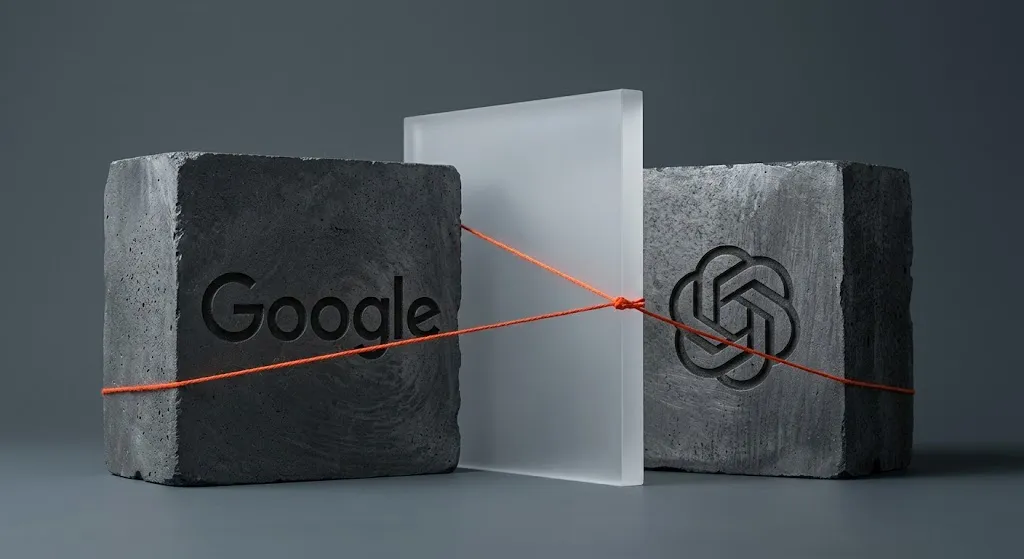
Gentlemen, the game has changed. The rules of the traffic war have been rewritten. In 2026, neural networks don't just search — they answer. If an AI doesn't cite your site — you're digital dust. You don't exist.
0. Executive Brief (The Core Changes)
2025 saw a tectonic shift. Google and Yandex rolled out AI answers. ChatGPT became a household tool. YouTube's role as a traffic source grew by 340%.
Part 1. Technical Foundation
Before you generate meaning, ensure the machine can physically see you.
Protocol 1: Code Visibility
Press Ctrl+U on your site. Find the article text.
— Text is present: OK.
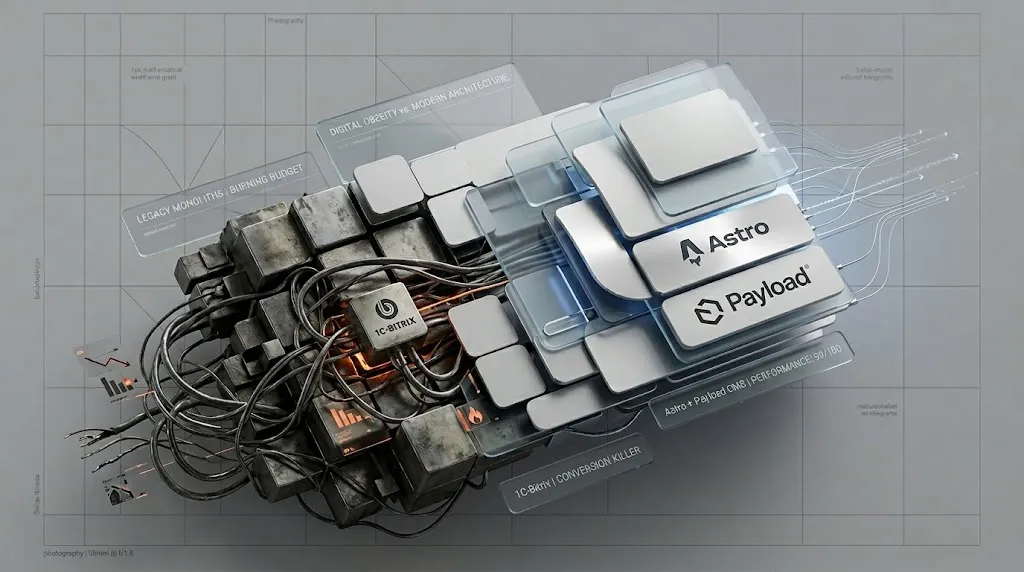
— Empty tags: Your site is built on React/Vue (CSR). Requires refactoring to SSR (Next.js, Nuxt.js, Astro). Otherwise, you're invisible.
Protocol 2: Bot Access (robots.txt)
Check the address: https://yoursite.com/robots.txt. If 404 — create the file:
User-agent: *
Disallow: /admin/
Disallow: /wp-admin/
Allow: /

Crawl-delay: 10
Sitemap: https://yoursite.com/sitemap.xml
Protocol 3: Response Speed
Check tool: Google PageSpeed Insights.
Content Load: < 2.5 sec
Interaction (INP): < 100 ms
Stability (CLS): < 0.1
If slow: compress images via TinyPNG, connect a CDN (Cloudflare).
Protocol 4: Structured Data
Check tool: Schema Validator. Errors must be 0.
Part 2. Data Markup (Code)
Neural networks are blind. They need metadata (JSON-LD) to understand what's a headline and what's an author.
A. Organization (In the homepage head)
<script type="application/ld+json">
{
  "@context": "https://schema.org",
  "@type": "Organization",
  "name": "Company Name",
  "url": "https://yoursite.com",
  "logo": "https://yoursite.com/logo.png",
  "sameAs": [
    "https://vk.com/yourpage",
    "https://t.me/yourchannel"
  ]
}
</script>
B. Article (In the head of each article)
<script type="application/ld+json">
{
  "@type": "Article",
  "headline": "Page Title H1",
  "datePublished": "2026-01-27",
  "author": {
    "@type": "Person",
    "name": "First Last",
    "jobTitle": "Position"
  },
  "publisher": {
    "@type": "Organization",
    "name": "Company Name"
  }
}
</script>
C. FAQ (Critically Important)
If you have a 'Questions & Answers' section, insert this code. It doubles citation chances.
<script type="application/ld+json">
{
  "@type": "FAQPage",
  "mainEntity": [
    {
      "@type": "Question",
      "name": "Question text?",
      "acceptedAnswer": {
        "@type": "Answer",
        "text": "Answer text."
      }
    }
  ]
}
</script>
Part 3. Meaning Generation (Content)
AI only cites quality material of a specific structure. Informational noise is filtered and discarded.
3.1. Minimum Volume
An article must contain at least 1500 words. Short notes are classified by algorithms as 'insufficiently informative' and are not used for generating answers.
3.2. Long-Read Architecture: The Reference Structure (~2000 words total).
7 steps- 01
Introduction (150 words)
Problem statement.
- 02
Section 1 (300 words)
Key thesis.
- 03
Section 2 (300 words)
Antithesis / detailing.
- 04
Section 3 (300 words)
Practical application.
- 05
Section 4 (300 words)
Nuances and exceptions.
- 06
Questions & Answers (FAQ)
A critical block for snippets (~200 words).
- 07
Conclusion (150 words)
Final takeaway.
3.3. Priority Formats. Algorithms are most eager to pull into their answers:
5 steps- 01
Step-by-step guides
Action algorithms and clear plans.
- 02
Lists
Structures like 'Top 7 Mistakes', 'Best Ways'.
- 03
Comparisons
Method A vs. Method B with tables.
- 04
Case Studies
Personal experience: how we did it and what came out.
- 05
FAQ
Answers to direct user questions.
| Requirement | Status |
|---|---|
| Break text with headings | IMPLEMENT |
| Examples, tables, real numbers | IMPLEMENT |
| First-person voice ('we discovered', 'I did') | IMPLEMENT |
| Copying from other sites | BAN |
| AI-generated text | BAN |
| No author | BAN |
3.5. 'About the Author' Block (Template)
Added at the end of every article. A photo is mandatory.
<h2>About the Author</h2>
<p><strong>First Last</strong> — position, X+ years of experience.</p>
<p>I've helped (whom): list of companies or client types.</p>
Part 4. Placement
Where to place information for maximum AI coverage.
| Platform | Target Type | Impact |
|---|---|---|
| YouTube | Video | 340% Growth (High) |
| Habr / VC.ru | Tech/Biz | Very Strong |
| Pikabu | Lifestyle | Medium |
Part 5. Tracking
3 steps- 01
Incognito
Enter 3-5 keywords into Google and Yandex.
- 02
Check AI Answer
Check if there's a generative answer at the top.
- 03
Control
Check if there's a link to your site in that answer.
Part 6. Checklists
5 steps- 01
Volume
> 1500 words
- 02
Heading Structure
Correct H1-H3 hierarchy is present
- 03
Trust Blocks
FAQ block at the end, 'About the Author' block at the end
- 04
JSON-LD Code
Metadata is implemented and verified
- 05
Load Speed
< 2.5 sec (Core Web Vitals passed)
Monthly Cycle:
4 steps- 01
Week 1
Check positions in AI search results.
- 02
Week 2
Technical audit (PageSpeed, Validator).
- 03
Week 3
Update old articles with new data.
- 04
Week 4
Publish a new long-read + Video.
| Tool | Task |
|---|---|
| PageSpeed Insights | Speed check |
| Schema Validator | Code check (JSON-LD) |
| Google Analytics 4 | Traffic analysis |
| Google Search Console | Accelerating indexing |
Typical Mistakes
Neural networks are slow. Wait 4-8 weeks
Model Collapse occurs. Future answers won't cite another AI.
Without E-E-A-T there's no trust. Add an author block.